
It’s not your fault. Nobody hands you a script for this. Word-for-word scripts for public meltdowns, “NO!”, screens and bedtime.
GET ALL 4 GUIDES — $27One-time payment · Download right after checkout · 90-day money-back guarantee
Sound familiar?
You’re not failing. You just need the words ready before it starts.
Try one today. Free.
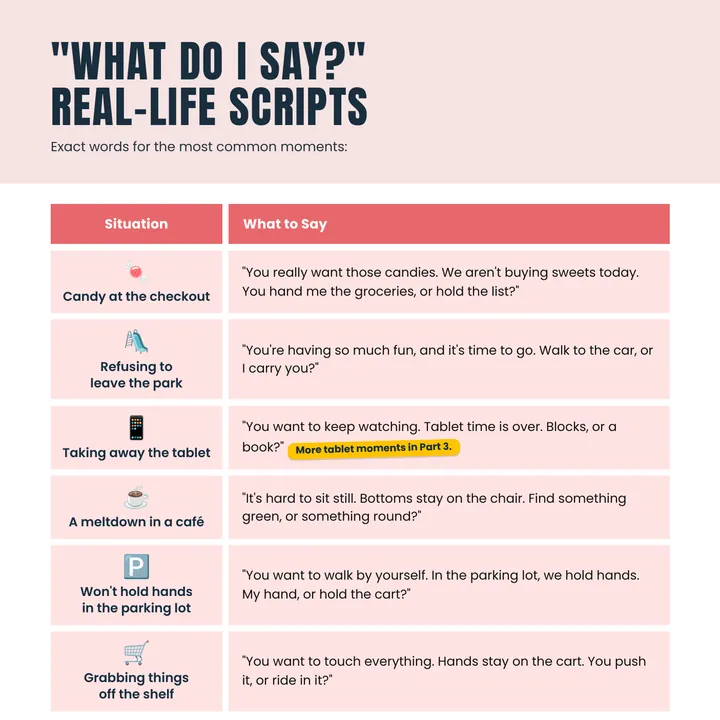
The candy at the checkout line. Here are the exact words from Part 1:
Say it calmly, then wait. The guides have words like these for every moment that wears you down.
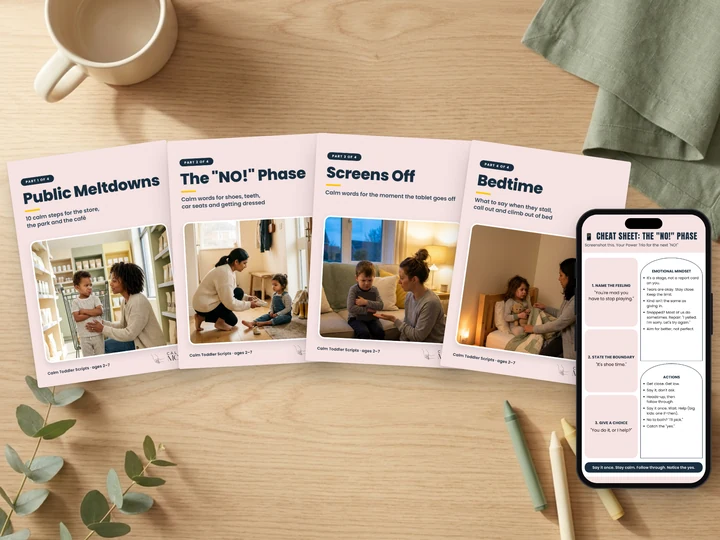
Everything you get for $27
That’s $6.75 a guide. No subscription. Read the first one tonight.
Secure checkout by Stripe · No account needed · 90-day money-back guarantee
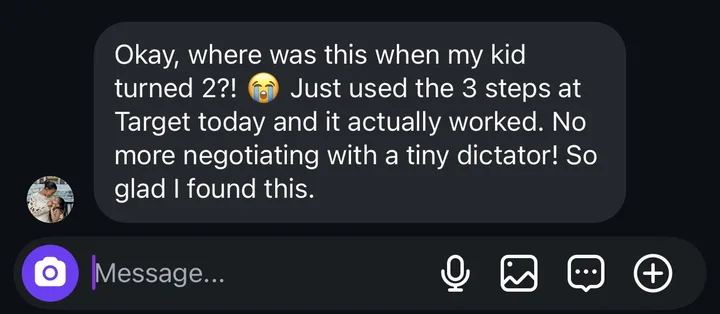
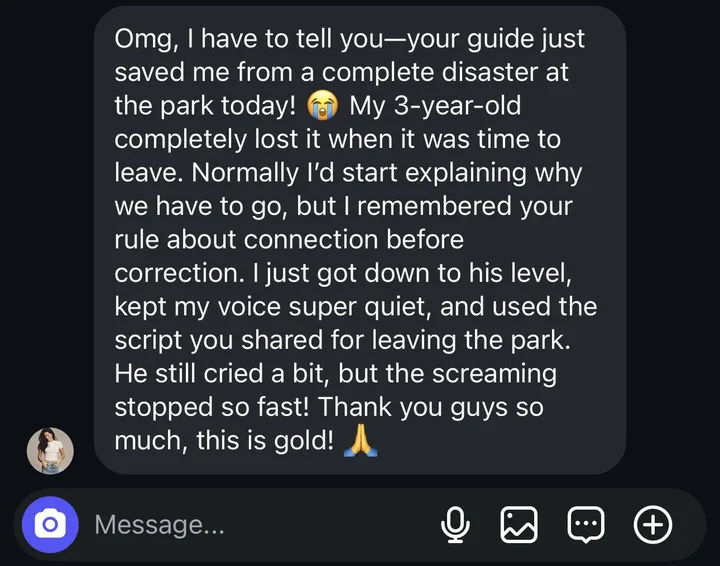
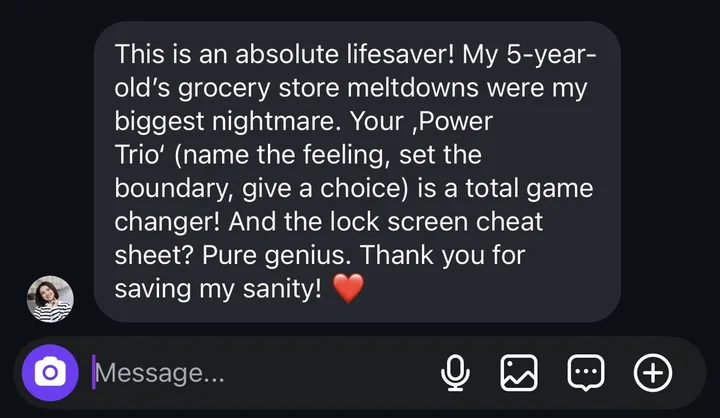
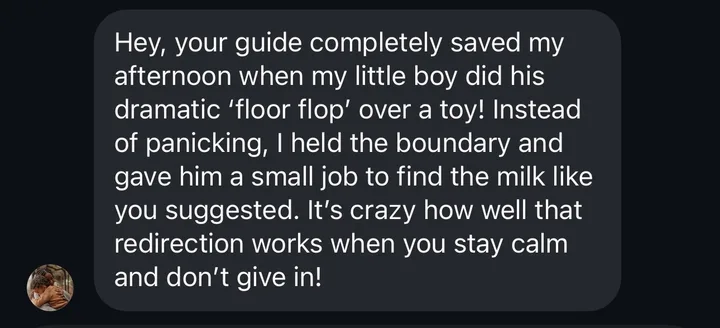
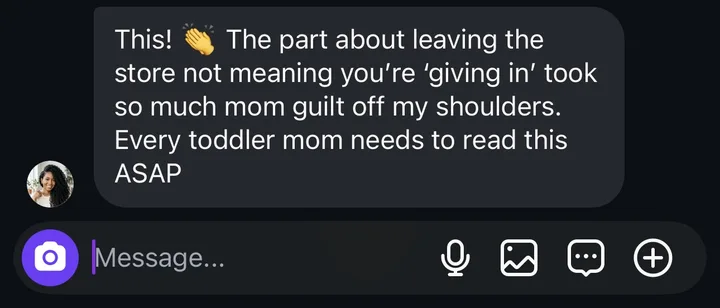
Moms who used Part 1, our meltdown guide
Messages from the first moms who read it.
Recommended by a speech therapist

“Every day in my practice, parents ask me the same question: ‘What do I say when my child is screaming and can’t hear a thing?’ After years of working in speech therapy, I’ve finally found a resource I can simply hand to parents as a ready-to-use guide.
Calm Toddler Scripts is an incredible cheat sheet for families with kids ages 2 to 7. The tools are backed by child development research and 100% validated by my daily professional experience. My highest recommendation!”
Why a speech therapist? Most meltdowns start when a child can’t put big feelings into words. Helping kids and their parents with exactly that is her everyday work.
One method for all 4 moments
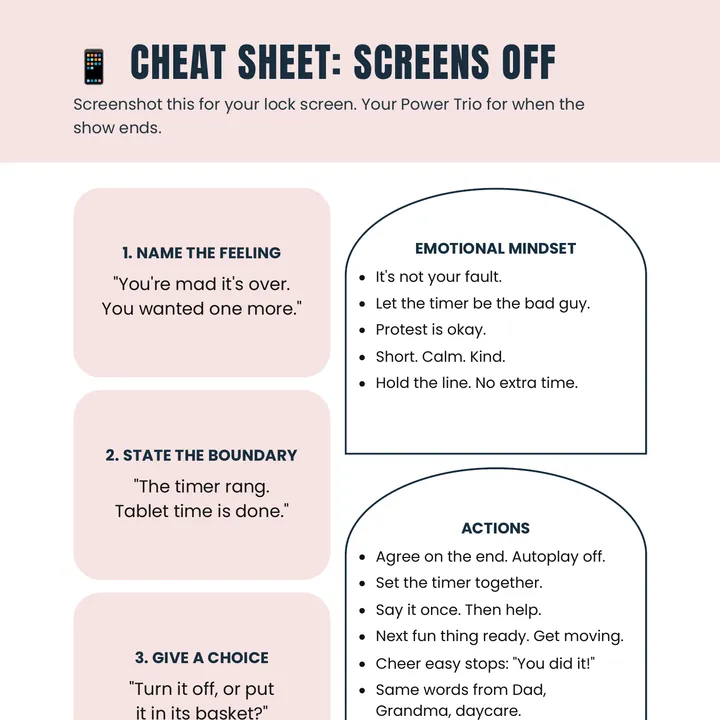
In a big-feelings moment, long explanations are hard for a little kid to take in. So every part is built on the same 3 short steps. Learn them once.
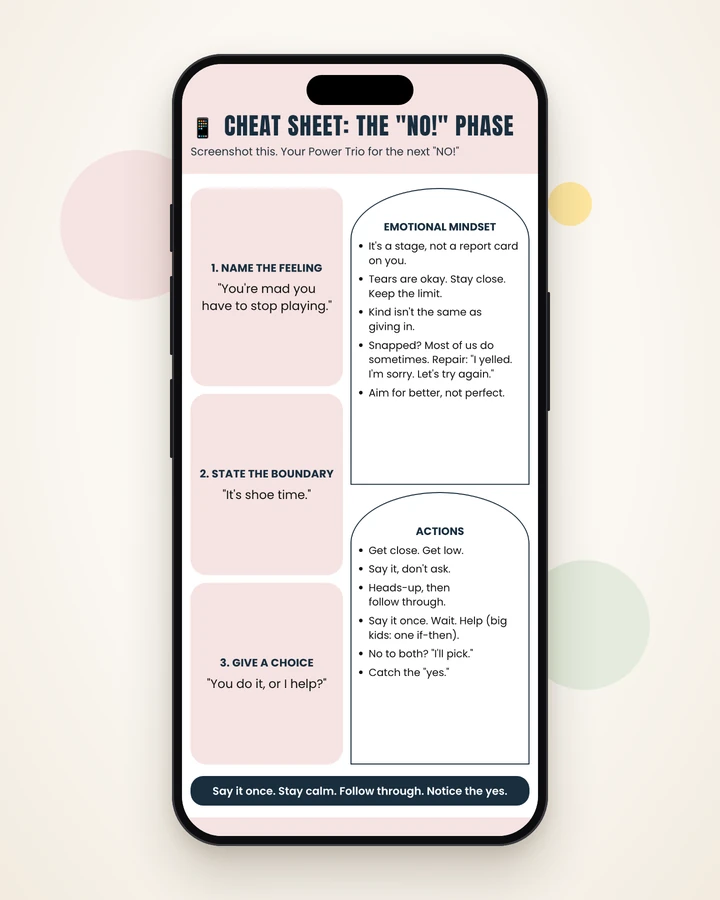
Some days they’ll still protest. That’s okay. Calm follow-through is what teaches.
GIVE ME THE WORDS — $27Download right after checkout · 90-day money-back guarantee
What’s inside

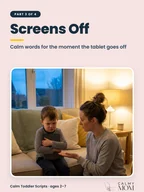
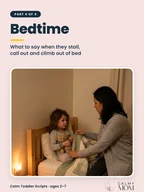
All 4 parts cite 113 published sources (pediatric guidance and child-development studies), all listed at the back. Each has a “When to get extra help” checklist. General information, not medical advice.
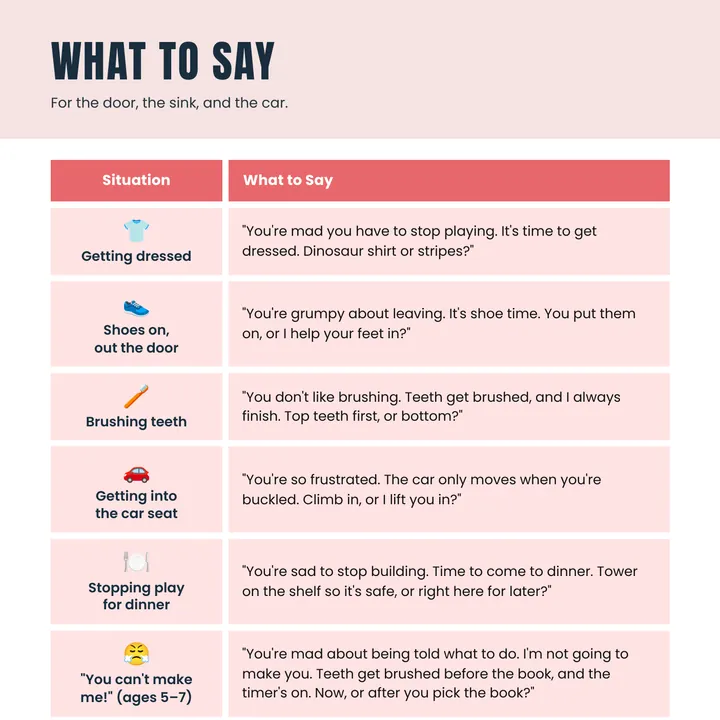
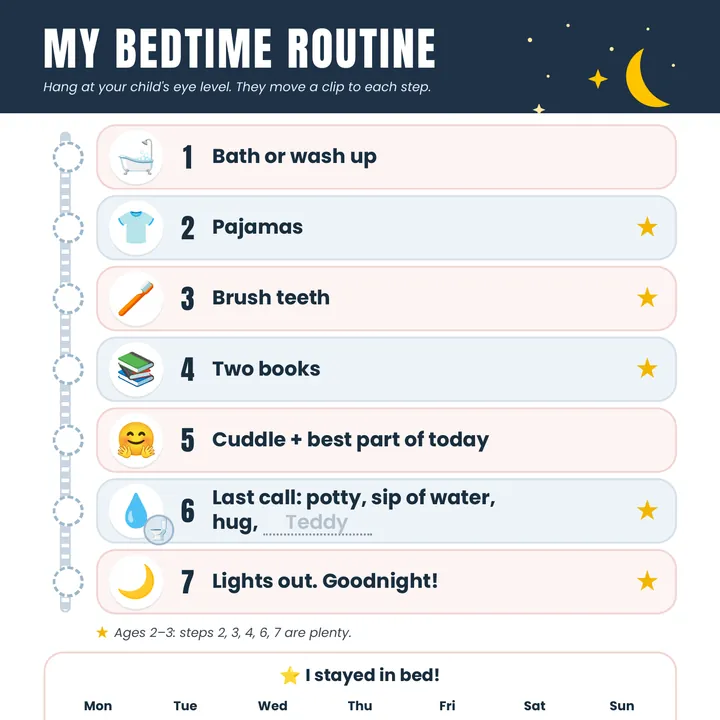
Peek inside: real pages
Is this for you?
- For you if: Your child is 2–7 and the same fights repeat every day
- For you if: You want calm words, not a lecture
- For you if: You’d rather read a short guide than sit through a long course
- Not for you if: You want a fix that works every time. Nothing does.
- Not for you if: You’re worried about your child’s development or safety. Please start with your pediatrician.
90-day money-back guarantee
Read it. Try the scripts. Not for you, for any reason? Email support@calmymom.com within 90 days and we’ll refund your full order. No questions asked.
You get a plan for the next hard moment, or your money back.
After a refund, we just ask that you delete your copy. Full terms: Refund Policy.There will be a next “NO!” Maybe tomorrow at 7:42 a.m. Have the words ready.
GET ALL 4 GUIDES — $27- Made by the Calmy mom team. All 4 parts cite 113 published sources, listed at the back.
- Secure checkout. Payments are processed by Stripe and PayPal; we never see or store your card number.
- One-time payment. $27 USD. No subscription, no auto-renew.
- 90-day refund. Any reason, one email.
- A real person answers. support@calmymom.com, before or after you buy.
Quick questions
Will this work for my kid?
The scripts are written for ages 2–7 and for the kid who does NOT want to cooperate. Each part is built on 3 steps: name the feeling, hold the limit, offer a choice you’re okay with. Every child is different, so we can’t promise results. That’s why you have 90 days to ask for a full refund.
Is this gentle parenting? Won’t my kid walk all over me?
Kind and firm. You name the feeling, but the limit holds: the tablet still goes off, the shoes still go on, bedtime is still bedtime. No long lectures, no threats.
How long is it? I’m exhausted.
Short on purpose. Part 1 is 11 pages; Parts 2–4 are 5–7 pages each. Start with the one-screen cheat sheet near the end of each part and read the rest during nap time.
My child is 2 (or 6). Will it fit?
It’s written for ages 2–7. Parts 2–4 add age tips: fewer words for 2–3-year-olds, more planning together with older kids. The bedtime pass is for ages 3+.
How do I get it? Can I pay inside Instagram or Facebook?
Yes. Pay by card, Apple Pay, PayPal or Link right inside the app; checkout is secured by Stripe and PayPal. Right after checkout, your download links appear on the order page and a copy goes to your email. Tap to open the PDF, then save it (iPhone: Share → Save to Files). Nothing ships.
Is this a subscription?
No. One payment of $27 USD. No auto-renew, no account needed. You’ll see CALMYMOM.COM on your card statement. Prices are in USD. We’re based in Poland, so some banks add a foreign transaction fee or convert at their own rate.
What’s the $5 add-on at checkout?
An optional Printables Pack (12 pages): bedtime and “Out the door!” morning charts (color and ink-saver), a make-it-yours photo chart, 6 bedtime passes, weekly “I stayed in bed!” strips, a trigger checklist for the fridge, a 2-minute tech setup card and blank script cards. Tick the box at checkout if you want it. The 4 guides work on their own.
Is this medical advice? Does it replace a doctor or therapist?
No. It’s general information for everyday moments. All 4 parts include a “When to get extra help” checklist. If you’re worried about your child, talk to your pediatrician or family doctor.